Product Description
Product Description
Frame scaffolding is also called tubular steel frame scaffolding, door style frame scaffolding, is a long established modular frame scaffolding system serving as working platform for construction and decoration purposes, which is composed of main frames, catwalk or walk board, braces or cross braces, brackets, coupling pins of spigot, guardrails and sometimes casters, etc.
| Pic. | Item | A (Width) | B (Height) | |
| Main Frame
Outer tube: 42*2.2mm/2.0mm/1.8mm Inner tube: 25*1.5mm/1.8mm/2.0mm |
1219mm | 914mm | ||
| 1219mm | 1219mm | |||
| 1219mm | 1524mm | |||
| 1219mm | 1700mm | |||
| 1219mm | 1930mm | |||
| 914mm | 1219mm | |||
| 914mm | 1524mm | |||
| 914mm | 1700mm | |||
| 914mm | 1930mm | |||
| H Frame
Outer tube: 42*2.2mm/2.0mm/1.8mm Inner tube: 25*1.5mm/1.8mm/2.0mm |
1219mm | 914mm | ||
| 1219mm | 1219mm | |||
| 1219mm | 1524mm | |||
| 1219mm | 1700mm | |||
| 1219mm | 1930mm | |||
| 914mm | 914mm | |||
| 914mm | 1219mm | |||
| 914mm | 1524mm | |||
| 914mm | 1700mm | |||
| 914mm | 1930mm | |||
| Item | A (width) | B (height) | C (length) | |
| 1829mm | 1219mm | 2198mm | ||
| 1219mm | 1219mm | 1724mm | ||
| 1829mm | 914mm | 2045mm | ||
| 1829mm | 610mm | 1928mm | ||
| 1219mm | 610mm | 1363mm | ||
| Item | Size | |||
| Joint Pin | 36*1.5*225mm | |||
| 36*1.2*225mm | ||||
| 36*1.0*225mm | ||||
Packaging & Shipping
Application
Company Profile
HangZhou CHINAMFG Industry Co., Ltd, with an investment of U.S. Dollars of 8 million, is a professional manufacturer engaged in the design, production & sale of scaffolding systems.
1. Location: HangZhou CHINAMFG is leading scaffolding manufacturer, located in HangZhou, ZheJiang Province, the raw material basement.
2. Team: We have professional team for sale, project design and construction.
3. Main products: Ringlock Scaffolding, Frame Scaffolding, Steel Plank, Catwalk, Ladders, Pipe & Clamp, Steel Prop, etc.
4. Production capacity: 7000-10000 Tons/month.
5. Loading capacity: 8-12 containers/day.
6. Delivery time: 10-15 days for 3-5 containers.
Fast delivery to satisfy your urgent project demand.
FAQ
Q1: Are you a factory or trading company?
A: We are a factory specializing in manufacturing scaffolding material.
Q2: Where is the loading port?
A: ZheJiang (Xihu (West Lake) Dis.g) Port.
Q3: What’s the MOQ of the product?
A: Different item has different MOQ. Normally one Container is preferred.
Q4: What certificates do you have?
A: We have ISO 9001, SGS certification.
Q5: Can I get some samples?
A: Yes, but usually the customer will pay for the cost and freight charges.
Q6: Do you have an OEM service?
A: Yes. We can provide OEM and ODM services as your requirements.
Q7: How long is the production cycle after ordering?
A: General it is about 15-30 days, according to different quantity requirement.
/* March 10, 2571 17:59:20 */!function(){function s(e,r){var a,o={};try{e&&e.split(“,”).forEach(function(e,t){e&&(a=e.match(/(.*?):(.*)$/))&&1
| Material: | Steel |
|---|---|
| Structural Style: | Multi-Pole Scaffolding |
| Framework: | Combined Scaffolding |
| Supporting Mode: | Projecting Scaffolding |
| Lapping Form: | Full Scaffolding |
| Scaffolding Part Type: | Scaffolding Frames |
| Customization: |
Available
| Customized Request |
|---|
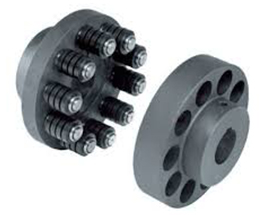
What Are the Maintenance Requirements for Pin Couplings?
Pin couplings are known for their simplicity and ease of maintenance. Regular maintenance helps ensure the longevity and optimal performance of pin couplings in various mechanical systems. Here are the key maintenance requirements for pin couplings:
- Lubrication: Most pin couplings require periodic lubrication to reduce friction between the pins and the coupling hubs. Lubrication helps prevent wear and corrosion, ensuring smooth operation.
- Inspection: Regular visual inspections are essential to identify any signs of wear, misalignment, or damage. Inspecting the pins, coupling hubs, and surrounding components can help detect potential issues early on.
- Torque Check: It is crucial to periodically check and retighten the bolts or screws that secure the coupling to the shafts. Loose fasteners can lead to misalignment and coupling failure.
- Alignment: Proper shaft alignment is critical for the effective functioning of pin couplings. Regularly check and adjust the alignment if necessary to minimize wear and vibrations.
- Environmental Protection: In harsh environments or corrosive conditions, take measures to protect the pin coupling from contaminants or chemicals that could cause damage.
- Replacement of Worn Components: When any of the coupling components, such as pins or hubs, show signs of significant wear, they should be replaced promptly to prevent further damage.
It is important to follow the manufacturer’s maintenance guidelines and recommendations for the specific type of pin coupling used in the application. Regular maintenance not only ensures the smooth operation of the coupling but also helps prevent unexpected breakdowns and reduces the risk of costly downtime. Proper maintenance can extend the service life of pin couplings and contribute to the overall reliability of the connected equipment.
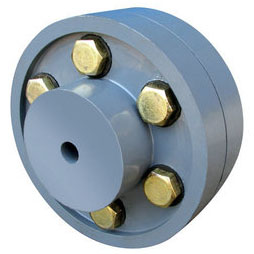
How Does a Pin Coupling Handle Angular, Parallel, and Axial Misalignment?
A pin coupling is designed to handle different types of misalignment, including angular, parallel, and axial misalignment. The unique construction of pin couplings allows them to accommodate these misalignments without compromising the efficiency and performance of the connected equipment.
1. Angular Misalignment: Angular misalignment occurs when the axes of the driving and driven shafts are not parallel but intersect at an angle. Pin couplings can tolerate angular misalignment because of their flexible and floating pin design. The two coupling halves are connected by a series of pins, which can pivot and move within the pin holes. This flexibility allows the coupling to bend slightly, adjusting to the angle of misalignment between the shafts.
2. Parallel Misalignment: Parallel misalignment happens when the axes of the driving and driven shafts are parallel, but they are laterally displaced from each other. Pin couplings can handle parallel misalignment to some extent due to the floating nature of the pins. The pins can move laterally within the pin holes, allowing the coupling to adapt to the offset between the shafts.
3. Axial Misalignment: Axial misalignment occurs when there is a linear displacement along the axis of one shaft concerning the other. While pin couplings primarily focus on handling angular and parallel misalignment, they may offer limited axial misalignment capabilities. The floating pins provide a small degree of axial movement, but excessive axial misalignment is best avoided to prevent additional stresses on the coupling.
It is important to note that while pin couplings can accommodate some degree of misalignment, excessive misalignment should be avoided to prevent premature wear and potential failure of the coupling and connected equipment. Regular inspection and maintenance can help identify and address any misalignment issues, ensuring the optimal performance and longevity of the pin coupling in power transmission applications.
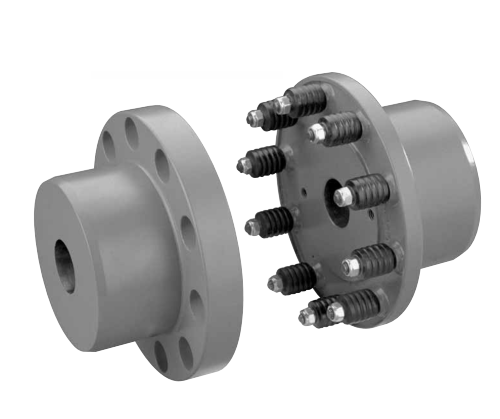
Can Pin Couplings Handle Misalignment Between Shafts?
Yes, pin couplings are designed to accommodate a certain degree of misalignment between shafts in rotating machinery. They are considered flexible couplings, which means they can provide some degree of angular, parallel, and axial misalignment capability.
Pin couplings typically consist of two hubs, each connected to a shaft, and a central sleeve with pins that transmit torque between the hubs. The pins allow for a limited range of movement, which helps to compensate for slight misalignments between the shafts.
The angular misalignment capacity of a pin coupling is achieved through the bending of the pins. When the shafts are misaligned at an angle, the pins on one side of the coupling experience bending while those on the opposite side are in tension. The pins are designed to withstand these bending and tension forces within their elastic limits, ensuring proper functioning and longevity of the coupling.
Similarly, the pins can accommodate parallel misalignment by sliding within the pin holes of the coupling’s central sleeve. This sliding action allows the hubs to move slightly relative to each other, compensating for any offset between the shafts.
However, it is essential to note that pin couplings have limitations in terms of the amount of misalignment they can handle. Excessive misalignment beyond their specified limits can lead to increased wear on the pins and other coupling components, reducing the coupling’s effectiveness and potentially causing premature failure.
While pin couplings are suitable for applications with moderate misalignment requirements, they may not be the best choice for applications with significant misalignment or where precise alignment is critical. In such cases, more flexible couplings like gear or elastomeric couplings may be more appropriate.
Overall, when considering the use of pin couplings, it is essential to carefully evaluate the specific misalignment requirements of the application and select a coupling that can adequately accommodate those misalignments while ensuring reliable and efficient power transmission.


editor by CX 2024-02-09